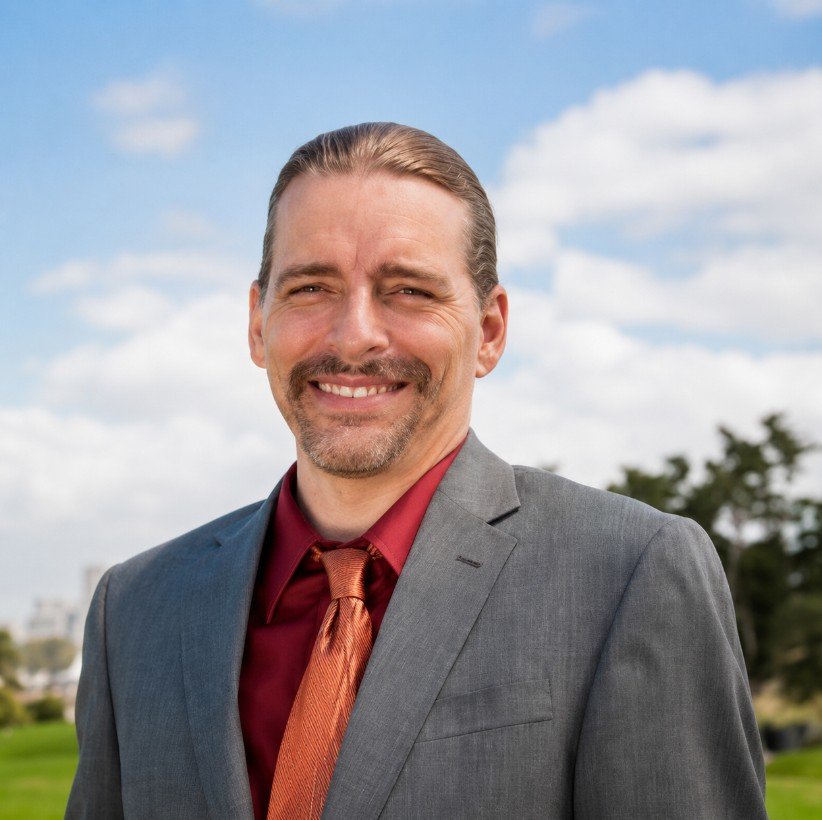
I am Christopher D. Smith, a geoscientist and spatial analyst pursuing graduate study focused on coastal wetland geomorphology and geobiology. My academic and professional trajectory leverages a unique intersection of multidisciplinary laboratory experience, spatial data science (GIS), and large-scale environmental restoration and field operations to investigate dynamic surface processes. As the Outstanding Geology Senior at Indiana University Northwest, my goal is to bridge large-scale geospatial analysis with field-based biogeomorphic investigation to better understand and address complex, evolving ecosystem challenges.
Foundation for Environmental Sustainability & Systems Thinking
Early study in business and environmental sustainability helped me begin asking how urban development, resource use, funding structures, and environmental decision-making shape the landscapes people live in. That perspective became an early foundation for my later interests in restoration, geology, GIS, and human-driven landscape change.
Explore more
- How this shaped my development
- systems-level environmental thinking
- sustainability and environmental policy perspective
- understanding of urban development and environmental tradeoffs
- project planning and organizational thinking
- exposure to budgeting, logistics, and resource management
- early understanding of environmental decision-making
- Skills & perspectives developed
- systems thinking and problem framing
- interdisciplinary reasoning
- project organization and planning
- professional communication
- basic budgeting/resource awareness
- environmental sustainability perspective
Foundation in Biology & Chemistry
Honors-level coursework in biology and chemistry strengthened my scientific foundation through laboratory methods, analytical reasoning, and environmental science. These experiences developed a broader understanding of biological and chemical systems that later informed my interest in geoscience and environmental change.
Explore This Stage
- How this shaped my development
- strengthened scientific reasoning and evidence-based thinking
- developed understanding of biological and chemical systems
- introduced laboratory methods, environmental science, and experimental design
- reinforced interest in ecosystem processes and environmental change
- built interdisciplinary connections later applied to geology and geomorphology
- Skills & perspectives developed
- laboratory procedures and scientific methodology
- analytical thinking and interpretation of data
- experimental design and observation
- scientific writing and technical communication
- systems thinking across biological, chemical, and environmental processes
Conservation, Wetlands & Field Ecology
Hands-on work in environmental restoration, wetland ecology, and field-based monitoring transformed scientific interest into applied experience. Through conservation work, ecological assessment, vegetation monitoring, hydrologic observation, and restoration activities, I developed a deeper understanding of how landscapes function, respond to disturbance, and evolve through the interaction of biological and physical processes. These experiences strengthened my interest in surface processes, ecosystem change, and field-based environmental science, which later shaped my transition into geology, GIS, and biogeomorphic research.
Experience & Projects
- How this shaped my development
- developed direct experience in wetland restoration and ecological stewardship
- developed practical experience with large-scale heavy equipment operations and field safety
- strengthened understanding of terrain, material movement, and site logistics
- strengthened understanding of hydrology, vegetation dynamics, and ecosystem function
- introduced field observation as a scientific tool for understanding landscape change
- reinforced interest in environmental disturbance, recovery, and surface processes
- deepened appreciation for the interaction between biological and geomorphic systems
- Skills & perspectives developed
- ecological field methods and environmental observation
- vegetation monitoring and habitat assessment
- wetland restoration and stewardship practices
- field documentation, sampling, and scientific observation
- interdisciplinary environmental problem-solving
- applied understanding of ecosystem dynamics, disturbance, and recovery
- operation and coordination around large-scale heavy equipment
- equipment safety awareness and field procedures
- material handling, site preparation, and operational support
- teamwork, communication, and project implementation in field environments
USGS & Applied Research Experience
Field and applied research experience with the United States Geological Survey strengthened my transition from environmental fieldwork into scientific investigation. Through ecological monitoring, environmental observation, data collection, and interdisciplinary collaboration, I gained experience working within research-driven environments focused on ecosystem change, hydrology, and Great Lakes systems. These experiences reinforced my interest in field-based science, environmental processes, and the integration of research with applied environmental management.
Research Details
- How this shaped my development
- gained experience working within a federal scientific research environment
- strengthened understanding of ecological monitoring and environmental observation
- developed familiarity with data collection, research protocols, and field documentation
- reinforced interest in hydrology, ecosystem dynamics, and environmental change
- strengthened interdisciplinary thinking across ecology, restoration, and earth systems
- deepened interest in applied research and scientific problem-solving
- Skills & perspectives developed
- ecological and environmental monitoring
- field sampling, observation, and documentation
- scientific collaboration and interdisciplinary teamwork
- data collection and research-oriented field methods
- environmental interpretation and systems thinking
- communication and coordination within research settings
Geology, GIS & Landscape Dynamics
Formal study in geology and GIS strengthened and refined long-standing interests in environmental systems, landscape change through time, and the interaction between biological and physical processes. Through geologic field methods, spatial analysis, historical reconstruction, and applied research, I began integrating field-based environmental experience with geospatial approaches to better understand dynamic landscapes and evolving surface processes. These experiences helped clarify my research interests in geomorphology, wetland systems, and biogeomorphic interactions while reinforcing the value of GIS as a tool for investigating environmental change across space and time.
Coursework & technical skills
- How this shaped my development
- strengthened geologic reasoning and interpretation of Earth surface processes
- integrated GIS with field-based environmental and geologic observation
- reinforced interest in dynamic landscape systems and environmental change through time
- developed stronger understanding of geomorphic, hydrologic, and ecological interactions
- strengthened interest in wetland, riverine, dune, and anthropogenic landscape systems
- clarified research interests in coastal wetland geomorphology and biogeomorphic systems
- Skills & perspectives developed
- GIS and spatial analysis
- historical aerial interpretation and temporal landscape reconstruction
- geologic field methods and environmental observation
- landscape interpretation across biological and physical systems
- scientific communication, research presentation, and applied analysis
- interdisciplinary environmental problem solving
Current Research: The Borman Expressway
My current research investigates the long-term environmental and landscape impacts of the Borman Expressway (I-80/94) within the Calumet Region using historical aerial reconstruction, GIS analysis, and environmental interpretation. Through georeferenced historical imagery and temporal landscape analysis, this project examines how highway construction reshaped land use, altered hydrologic systems, displaced communities, and transformed surrounding environmental conditions through time. By integrating geology, geomorphology, GIS, and historical reconstruction, this research strengthened my interests in landscape dynamics, anthropogenic geomorphic change, and the interaction between human infrastructure and evolving environmental systems.
Methods, findings & presentations
- How this shaped my development
- strengthened independent research design and long-term project development
- integrated geology, geomorphology, GIS, and historical aerial reconstruction into applied environmental research
- reinforced interest in landscape dynamics and anthropogenic environmental change through time
- strengthened understanding of hydrologic modification, infrastructure impacts, and surface-process interactions
- developed greater appreciation for relationships between human systems, ecological systems, and changing landscapes
- strengthened interest in geomorphology, wetland systems, and environmental reconstruction
- Skills & perspectives developed
- historical aerial interpretation and georeferencing
- GIS-based temporal landscape analysis
- environmental and geomorphic interpretation across changing landscapes
- independent research design and scientific problem-solving
- scientific communication through poster presentation and public-facing research
- interdisciplinary integration of geology, GIS, hydrology, ecology, and historical analysis
Looking Ahead
The experiences that shaped my path in environmental science, restoration, geology, GIS, and applied research continue to inform my evolving research interests in geomorphology, wetland systems, and dynamic landscape processes. Building on field-based environmental experience, historical reconstruction, and spatial analysis, I hope to pursue graduate research focused on the interaction between biological and physical processes in coastal and wetland environments, particularly within systems shaped by hydrology, disturbance, restoration, and long-term environmental change. My long-term goal is to contribute to research that strengthens understanding of evolving landscapes and supports practical environmental stewardship and restoration.
Future Research Directions
- How this shapes my future
- pursue graduate study focused on geomorphology, wetland systems, and biogeomorphic interactions
- expand integration of geology, GIS, environmental history, and field-based observation
- investigate interactions between biological systems, hydrology, and changing landforms
- contribute to applied environmental research involving restoration, landscape resilience, and environmental change
- continue developing interdisciplinary approaches to understanding dynamic Earth systems
- Skills & perspectives continuing to develop
- geospatial analysis and historical environmental reconstruction
- geomorphic and environmental systems thinking
- interdisciplinary scientific problem-solving
- field-based environmental observation and interpretation
- scientific communication and applied research development