So much has changed in the past few years. Higher education has become more expensive, the job market continues to evolve, and artificial intelligence is reshaping industries at a pace few could have predicted. It’s understandable that prospective students are asking a simple but important question:
Is a geology degree still worth the investment?
Is a geology degree worth it? The answer isn’t as straightforward as a simple “yes” or “no.”
Like any degree, geology comes with opportunities and challenges. Before committing four years of your life and thousands of dollars to a college education, it’s important to understand both.
The Reality
There needs to be more honesty about what many universities and employers are not discussing openly with students.
College tuition continues to rise, making higher education increasingly difficult to afford. Many students graduate with significant debt while entering an uncertain economy. At the same time, companies across many industries are looking for ways to improve efficiency, with artificial intelligence becoming one of the newest tools for reducing costs and automating routine work. As a result, many traditional entry-level positions are changing or disappearing altogether.
Geology has always been somewhat cyclical. Employment opportunities often reflect the broader economy. During periods of growth, industries such as environmental consulting, mining, engineering, construction, and energy tend to expand. During economic downturns, hiring may slow as projects are delayed or canceled.
Another reality is that many geology graduates will need to relocate to find the right opportunity. While jobs exist throughout the United States, they are not evenly distributed, and flexibility can significantly improve employment prospects.
The good news is that geology remains one of the science disciplines where a bachelor’s degree can still lead directly to a rewarding career. A master’s or Ph.D. certainly opens additional opportunities in research, academia, and specialized fields, but many successful geologists begin their careers with only an undergraduate degree.
Who Should Study Geology?
Geology is an excellent field for people who enjoy solving problems, asking questions, and understanding how our planet works.
The best geologists are naturally curious. They enjoy spending time outdoors, but they’re equally comfortable analyzing data in a laboratory or working with computers. Success in geology often requires a foundation in chemistry, biology, physics, mathematics, and increasingly, computer science.
Many people assume geology is simply the study of rocks. In reality, geology is the scientific study of the Earth, its structure, composition, history, and the processes that continue to shape it.
Geologists study:
- Earth’s history and past environments
- Climate change and environmental processes
- Fossils and the evolution of life
- Natural hazards such as earthquakes, volcanoes, and landslides
- Water resources
- Human impacts on landscapes
- Critical mineral resources needed for modern technology
Their work helps society locate groundwater, manage environmental contamination, design safer infrastructure, understand coastal erosion, identify mineral resources, and prepare for natural hazards.
Geology Is Becoming More Technological
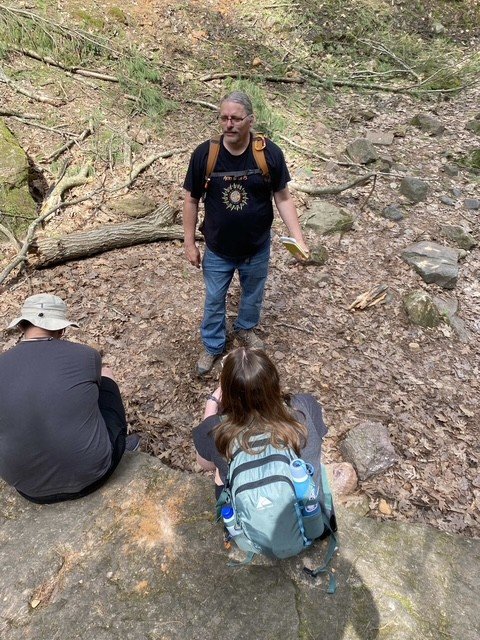
Today’s geologists rely on far more than rock hammers and field notebooks.
Modern geology combines field observations with advanced technology, including Geographic Information Systems (GIS), remote sensing, drones, satellite imagery, LiDAR, and 3D geological modeling software.
Geophysicists use Ground-Penetrating Radar (GPR), seismic surveys, gravity measurements, and magnetic surveys to investigate what lies beneath the Earth’s surface without excavation. Drilling programs recover rock cores for direct examination, while laboratory instruments such as X-ray Fluorescence (XRF) and mass spectrometers determine the chemical composition of rocks with remarkable precision.
Digital field mapping has also transformed the profession. Rugged tablets equipped with GPS now allow geologists to collect and synchronize field observations directly with digital mapping software.
Technology will continue to change, and successful geologists must be willing to keep learning long after graduation.
Building a Career Beyond the Degree
A geology degree by itself is often not enough to stand out in today’s job market.
The strongest job candidates combine their geology education with complementary technical skills that employers increasingly value.
These include:
- Geographic Information Systems (GIS)
- Remote sensing
- Python programming
- Drone operation
- Data analysis
- Technical writing
- Scientific communication
- Hydrogeology
- Experience operating field equipment and heavy equipment
What I Realized
When I started my geology degree, I already had a strong background in ecology and fieldwork. Returning to school, I believed success would come from earning good grades. Over time, I realized that grades were only part of the equation.
Field experience, undergraduate research, GIS, communication skills, and a willingness to learn new technologies have been just as important to my development as a geologist. One of the most valuable lessons I learned was to make my hobbies work for me. My interests in photography, drones, and exploring the outdoors have complemented my education and helped me develop skills that are increasingly valuable in modern geology.
.
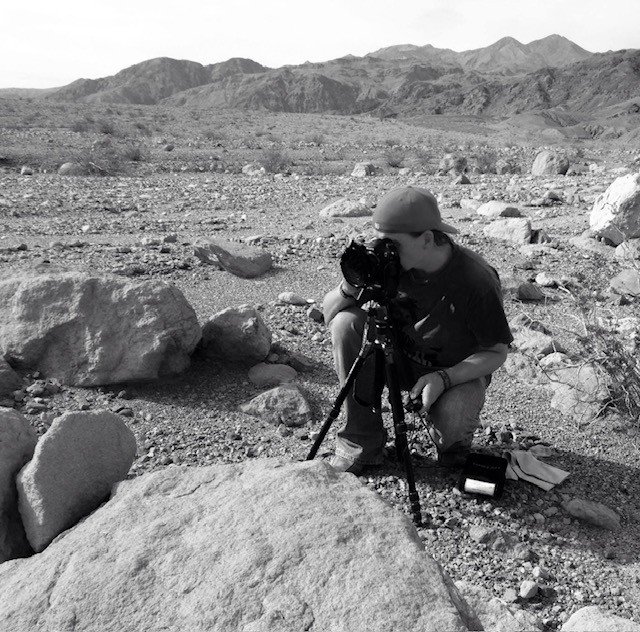

The classroom provides the foundation, but the experiences you pursue outside the classroom, through research, internships, conferences, fieldwork, volunteer work, or personal projects often determine the opportunities that follow
So… Is It Worth It?
I believe it is.
Looking back, I wouldn’t change my decision to pursue geology, even knowing the challenges that exist today. Through internships with AmeriCorps and the Student Conservation Association, undergraduate research in computational chemistry and astrobiology, and my current research on transportation infrastructure and landscape change, I’ve discovered interests and opportunities that I never expected when I first returned to college. Each experience taught me something different, and together they helped shape the geologist I am becoming.
That doesn’t mean the journey has been easy.
There isn’t a cookie-cutter path to becoming a geologist. Many students balance coursework with multiple jobs, internships, long commutes, and family responsibilities. Science is demanding, drawing from chemistry, physics, biology, mathematics, and computer science. Some days you’ll question whether you’re capable of finishing. Most of us do.
What I’ve learned is that success in geology isn’t defined solely by earning a degree. It’s built through the experiences you seek, the skills you develop, and your willingness to keep learning. The diploma opens the door, but your curiosity and adaptability determine how far you go.
If you’re looking for someone to tell you that geology is easy, guarantees a high salary, or provides a perfect career path, I can’t honestly say that. But if you’re curious about the Earth, enjoy solving problems, and are willing to continue learning long after graduation, geology offers a career that can be both challenging and deeply rewarding.
Every geologist’s path is different. Mine began in ecology, evolved through chemistry and GIS, and continues today through research on transportation infrastructure and landscape change. Yours will likely look very different and that’s one of the strengths of this profession.
For me, that has made the journey worthwhile.